

Training & Experiences
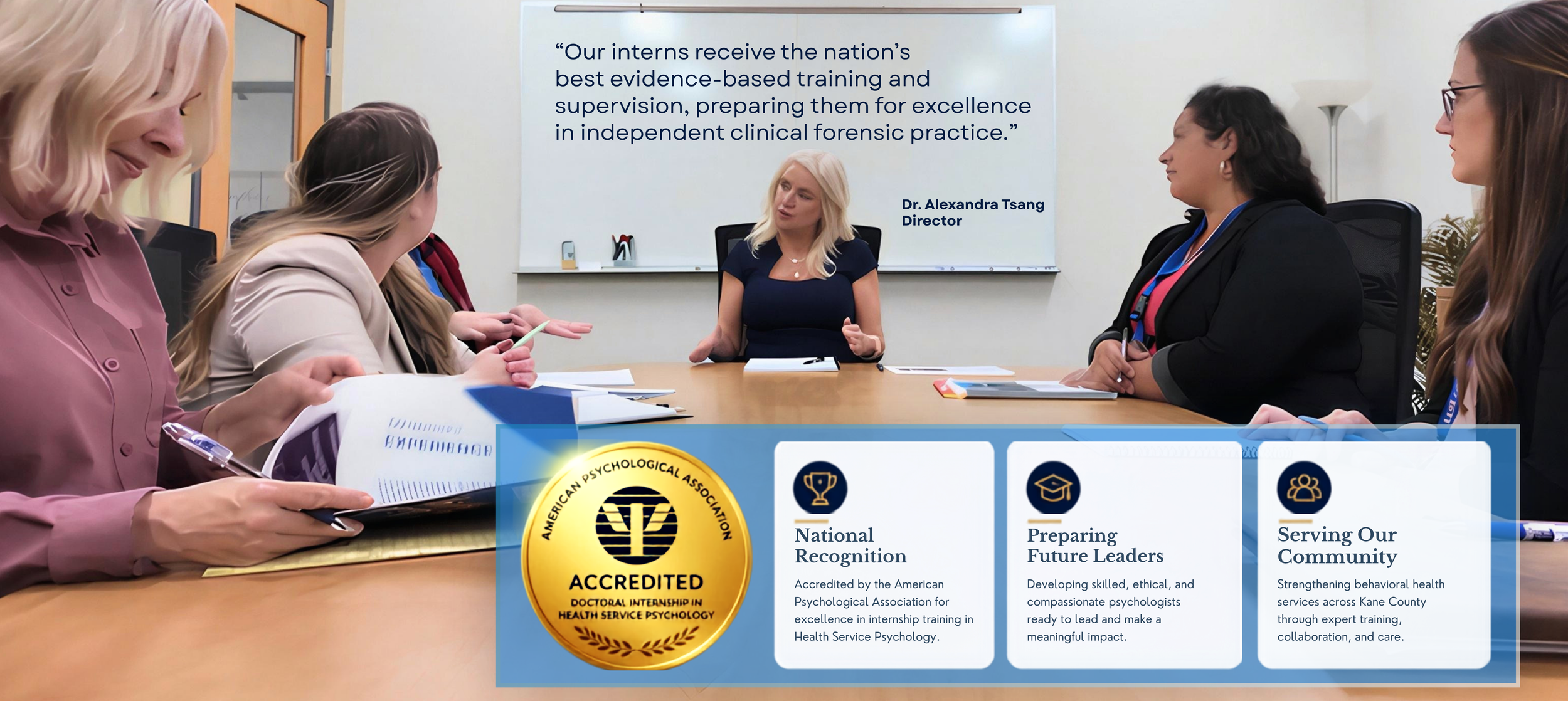
“Interns can be assured that they are getting the best possible evidence-based training and supervision that will equip them for independent practice in clinical forensic psychology.”

KCDC Training
The training received by Kane County Diagnostic Center Interns is organized around two weekly seminars: one focusing on issues related to conducting therapy, the other on the assessment process.
Each seminar begins with general overviews of the interplay between the work interns will do and the unique role of the agency within the larger system. Following this introduction, training proceeds from a review of basic concepts and principles (e.g. clinical interviewing, assessment instruments), to more specialized and advanced concepts (e.g. working with dangerous clients, fitness evaluations).
As an adjunct to this didactic component, interns also participate regularly in case conference and group supervision, both as presenters and peer consultants.
By the end of their internship, interns will have gained confidence in their emerging sense of professional identity and will have been thoroughly exposed to topics that will assist them in both participating effectively at the post-doctoral level, and in preparing for the national licensure examination.
As much as possible, the intern's experience in supervision parallels the building blocks approach they receive in seminars. While the minimum quantity of supervision is fixed and consistent, the quality of supervision generally shifts as interns grow in skill and confidence.
The ultimate responsibility for all work by interns remains with their supervisor and thus the supervisor will co-sign all psychological evaluations, therapy progress notes and all correspondence to the court. However, the goal of training is that the role of the supervisor evolves from teacher/advisor towards mentor. It is our belief that this is a vital piece of our intern's professional development as they prepare to work in the field of psychology.
Therapy Experience
The KCDC provides individual and family therapy services. Interns work with people both on an outpatient basis and in the institutional settings of the Juvenile Justice Center and Kane County Jail. Interns learn to use referral and diagnostic information as well as material from diagnostic interviews to develop and implement a treatment plan and to assess the client’s response and progress. Interns will continue to develop a sense of their unique style as therapists. Interns can also opt to co-lead a divorce parenting education program for an additional stipend.
Requirements and Expectations:
Interns typically carry about 8-10 individual, and/or family therapy cases.
Interns are expected to maintain timely progress notes of their therapy sessions.
Interns make detailed progress notes, audio or videotapes of their sessions for use in supervision and case conferences. Live supervision through a one-way viewing mirror is also utilized throughout the training year.
Interns gain experience responding to crisis situations such as doing suicide assessments for probationers or for individuals involved in specialty courts.
Diagnostic Experience
Interns can expect to gain further experience in psychological assessment using standard objective and projective instruments. Interns will learn how to consult with referral sources to specify questions that guide the battery of tests.
The internship provides the opportunity to build and improve the skills necessary to administer and interpret a variety of tests and to render an integrated picture of the person who has been examined. Interns will prepare a formal written report of their findings to be submitted to the referral source. Interns learn to present their findings to a group of colleagues and to collaborate in developing an appropriate set of recommendations.
Interns are expected to complete court-mandated psychological evaluations.
Evaluations consist of full batteries and briefer consultation reports. In some cases, there will be additional feedback or conferences with the examinee, parents, court officials or other persons. In these instances, the supervising psychologist will assist the intern. Interns are also expected to develop familiarity with the agency and the court system that it serves. They are encouraged to become actively involved in the KCDC’s program by attending additional staffing, court proceedings, and in-service training sessions.